How G&B Digitized the Retail Supply Chain with RFID Technology
G&B embarked on a digital transformation journey of its supply chain to improve logistics control, streamline stock management, and increase visibility across all processes, from the warehouse to the retail store.
Benefits:
Reduced operational costs
Improved sustainability
Increased operational efficiency
Superior service quality
Solution scalability
The Client: G&B and the High-End Fashion Retail Sector
Founded in 1981 in Flero, G&B operates in the luxury fashion retail sector and is active across the European market, with operations in Italy, Spain, and Switzerland. The company represents a well-structured and dynamic player in the fashion retail industry. Managing complex assortments, frequent transfers between warehouses and stores, and flows related to e-commerce requires reliable tools to ensure control, speed, and operational consistency.
In this context, accurate item traceability and the availability of real-time updated data become essential elements for supporting operational efficiency and enhancing the service provided to the end customer.
The Challenges: Manual Control, Limited Visibility, and Complex Inventory Management
Before the implementation, G&B had to deal with several challenges typically associated with logistics processes in fashion retail: complex inventory management, manual parcel control, limited shipment visibility, and difficulties in preventing theft. These factors made daily operations more demanding and increased the risk of errors during the transfer of goods between warehouse, transportation, and stores.
In particular, the need for manual checks slowed down operational activities and made it more difficult to maintain constant alignment between physical merchandise and system data. As a result, stock availability updates were less timely, and the management of distributed inventory became increasingly complex.
The Solution: end-to-End RFID Traceability
To address these needs, an integrated RFID solution was implemented to support garment traceability throughout the entire logistics cycle: from the initial RFID label printing and packaging process to outbound operations toward stores and warehouses, with further extension to in-store inbound processes, inventory management, and anti-theft functionalities.
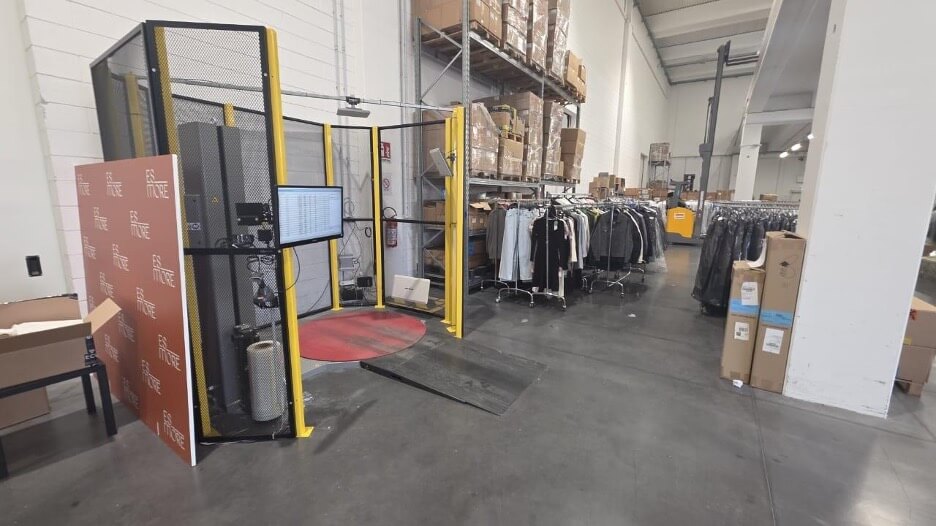
The solution includes RFID tags applied to garments, RFID gates for shipment control, RFID desks for e-commerce order preparation, and mobile devices supporting warehouse and in-store operations, along with full integration with the company’s WMS and ERP systems.
Managed processes
RFID printing: each garment receives a unique tag that enables accurate identification by size, color, and model.
RFID Packing: during e-commerce order preparation, RFID desks automatically detect the contents of each package without the need to manually scan individual barcodes. This ensures full consistency between the received order and the packed merchandise.
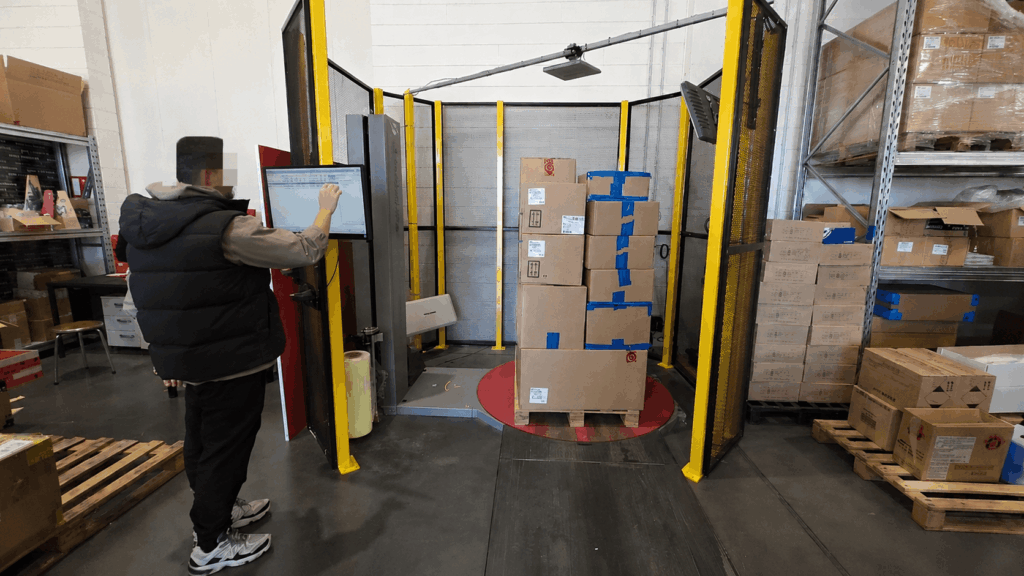
RFID Outbound: packages ready for shipment pass through RFID gates capable of performing bulk readings within seconds. The system compares the detected data with the transfer order stored in the WMS/ERP and, if the information matches, authorizes the shipment.
RFID Inbound in store: upon arrival at the store, staff can register incoming goods quickly and accurately. Remote RFID reading eliminates the need to open boxes and check garments one by one, making products available for sale in a shorter time.
RFID inventory: inventory counting has evolved from a semi-annual activity into a daily operation performed using mobile RFID handheld devices.
RFID anti-theft system: exit gate protection leverages RFID technology to provide a discreet solution that remains fully consistent with the store’s aesthetic. In the event of an unauthorized removal, the system identifies the specific item and triggers an acoustic alarm.
The results: greater control, fewer errors, higher efficiency
The introduction of RFID technology delivered tangible benefits to G&B’s operational management. The first major result was annual savings of €50,000, achieved through the automation of inventory activities and the reduction of labor hours dedicated to manual stock counting.
A second significant impact concerns the frequency of inventory checks: from inventories carried out only twice a year, G&B moved to daily inventory operations, with constantly updated data and greater visibility over product availability across stores.
Finally, the automated verification of parcels through RFID desks and gates streamlined shipping and receiving operations, eliminating repetitive manual checks and improving the overall reliability of the process.
A scalable model for connected retail
The G&B project demonstrates how RFID technology can become a strategic ally for fashion retail, especially when the goal is to combine operational accuracy, execution speed, and centralized control across the entire supply chain. Integration with WMS and ERP systems also enables the creation of a consistent digital ecosystem capable of supporting business growth and structurally improving process quality.